
When water moves the wrong way across your property, it can quietly undo the work that makes outdoor living enjoyable. As a drainage company in Bedford and Armonk, NY, we see how even small drainage problems can show up as soggy lawn areas, shifting pavers, muddy edges around patios, or water pooling near the foundation. Drainage issues rarely stay isolated. Water follows gravity, and it will always find the easiest route — even if that route runs straight through your outdoor kitchen area, across walkways, or into planting beds. The right drainage plan stops water from taking over the spaces you want to use.
Related: Solve Drainage Challenges With a Stormwater Management Company In Chappaqua, NY
Why A Drainage Company Matters When Water Starts Changing How You Use Your Property
A drainage company does more than move water away from one problem spot. We look at how water behaves across your full property, especially during heavy rain events when runoff moves quickly and overwhelms low areas. Water can create problems in ways people do not expect. It can undermine paver patios from below, wash out base materials along walkways, and create ongoing erosion where soil should stay in place. A drainage company approaches water the way a landscape designer approaches a full outdoor space: with a plan that accounts for flow, grade and long-term performance.
Water issues also affect your landscape. When runoff repeatedly floods planting beds, it can drown roots, compact soil and create weak growing conditions for plantings meant to thrive. A drainage company helps protect plantings by keeping soil structure intact and directing water away from areas where it causes damage. That often means combining grading, subsurface drainage, and surface solutions in ways that feel seamless in the finished landscape.
Drainage Company Site Evaluations: How We Diagnose What’s Really Happening
A drainage company cannot solve water issues by guessing. We start with observation. We look for patterns after rainfall, the way water collects, and where it leaves behind sediment. We check downspout discharge points, slope direction, and low areas that hold water longer than the surrounding land. We also check structural elements like patios, retaining walls and natural stone steps because these features can reveal movement caused by repeated saturation.
A drainage company also considers what sits below the surface. In our area, soil conditions vary widely. Some properties hold water because the soil drains slowly. Others shed water quickly, which increases runoff volume and speed. We often test soil compaction and look at how water penetrates the ground. These details matter because the wrong system can either fail to move water or move it too aggressively and create new problems downstream.
A drainage company takes a big-picture approach. Water that pools near the backyard patio may originate from a front lawn slope or from a neighbor’s runoff. That is why we evaluate the full flow path. A drainage plan that protects outdoor living needs to work with the entire property’s grades, not just the trouble spot.
Related: Common Drainage Problems in Hawthorne, NY, (And How a Local Company Can Fix Them)
Drainage Company Solutions That Protect Outdoor Living, Plantings, And Structural Features
A drainage company solves water issues by controlling where water goes before it can damage patios, walkways, planting beds, or structural features. We start with grading, reshaping subtle slopes so water moves away from outdoor living areas instead of pooling near the surface. When grading alone cannot do the job, we install subsurface drainage systems such as French drains, which collect water below ground and move it through perforated piping. We often pair those systems with catch basins placed at low points to capture surface water and direct it to a controlled outlet.
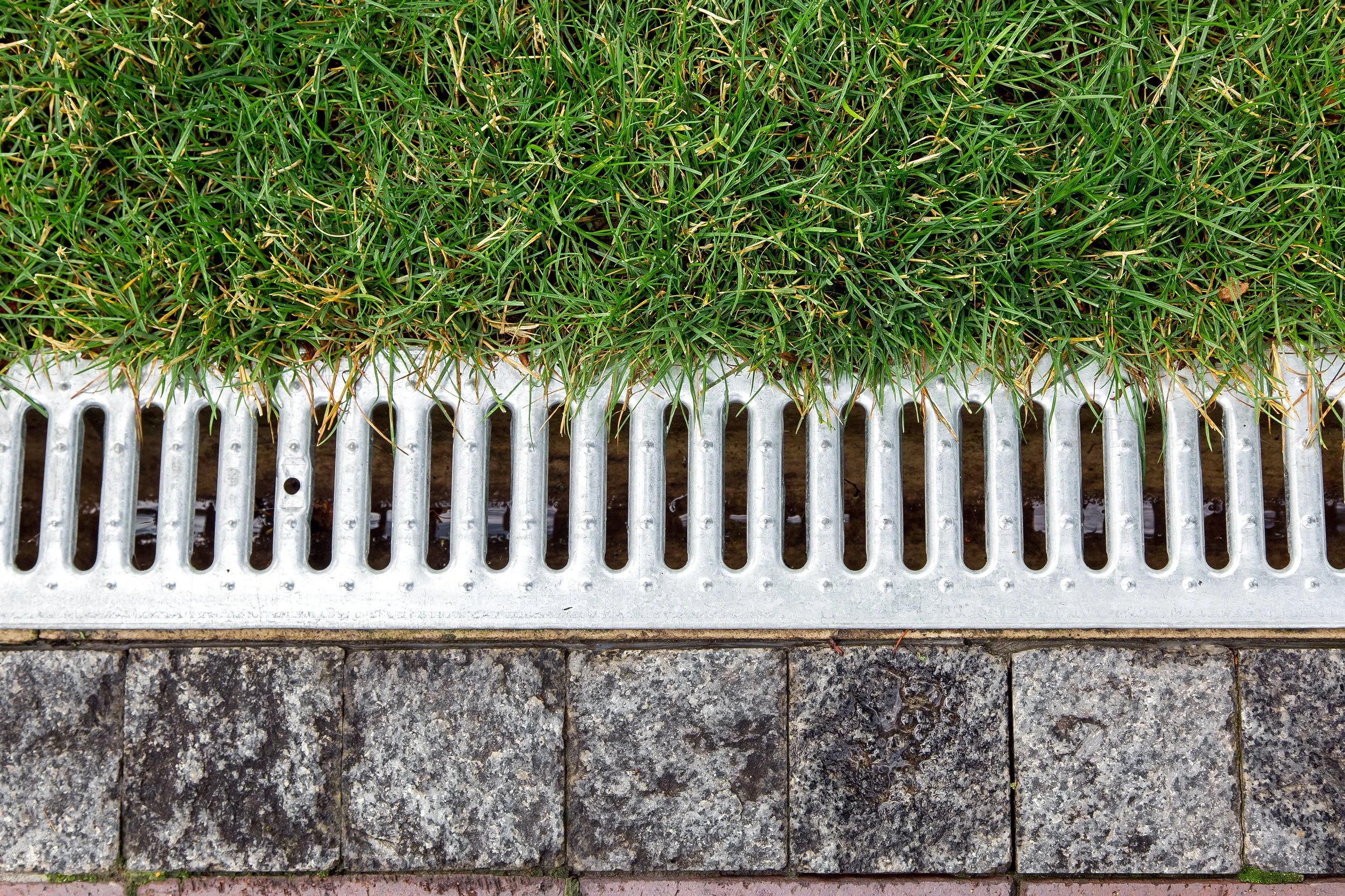
In areas with pavers, we may recommend permeable pavers when conditions allow, since they help water filter through instead of collecting on top. We also pay close attention to transition zones, like where patios meet lawn areas or where walkways connect to driveways, because those seams often trap water. Drainage inlets and clean grading transitions help keep those areas dry and stable.
Drainage planning also supports healthy plantings and protects construction elements. Too much water can stress roots and weaken soil, while heavy runoff can wash mulch and soil onto patios and walkways. We keep water from saturating planting beds, account for freeze-thaw cycles, and reduce erosion with smart grading and hidden drainage solutions. The goal stays simple: the system works quietly in the background so outdoor spaces stay comfortable, stable, and ready to use after rain.
